Rock Art Sites
Right from Shatial in the upper Kohistan district of Khyber-Pakhtunkhwa province to upper Hunza District of Gilgit-Baltistan, the rock art heritage is located at many sites on the right and left banks of the Indus river and its tributaries.
Introduction of some of the most important rock art sites along the Karakorum Highway are mentioned here:
SHATIAL SITE
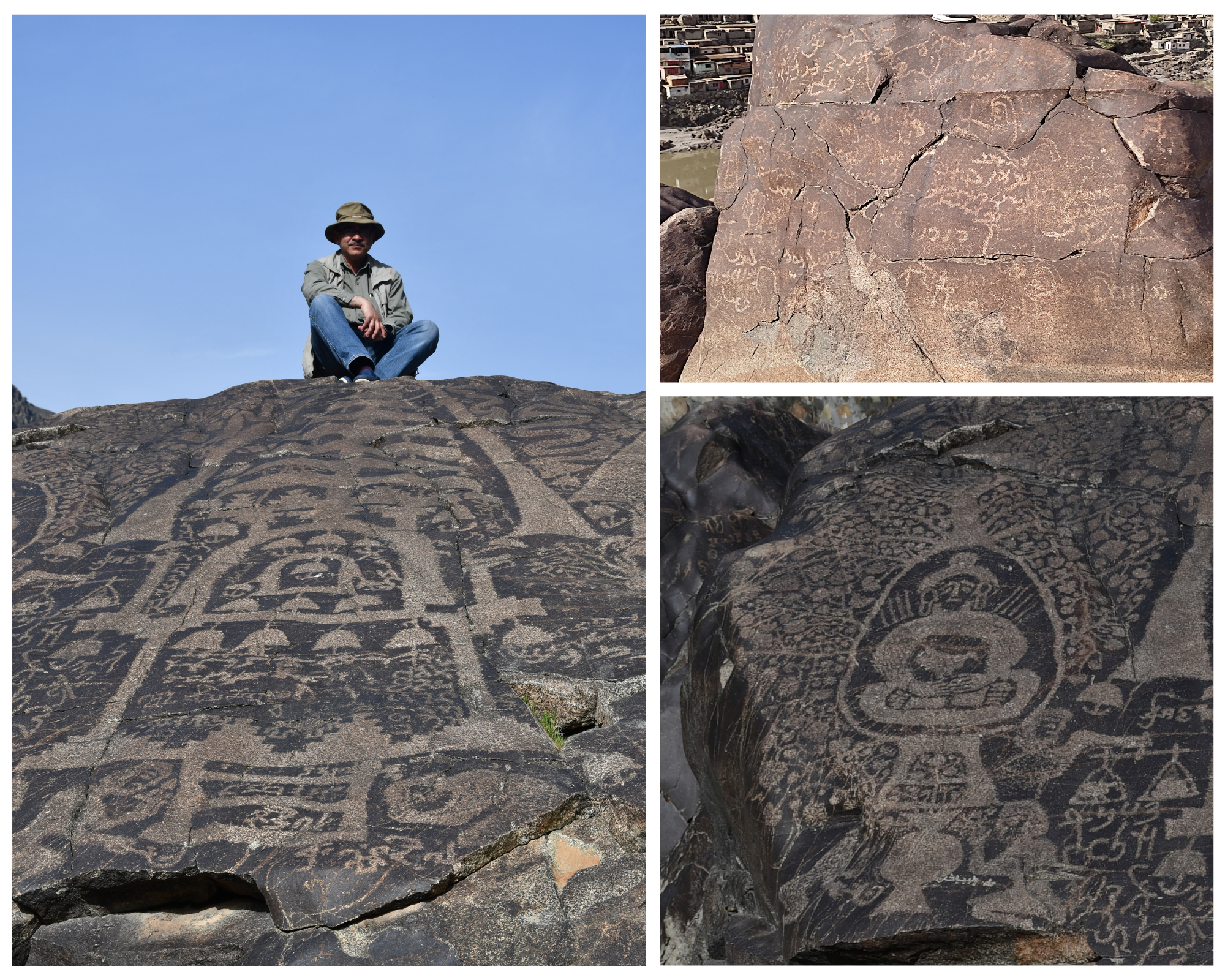
This is a major rock art site on the left bank of the Indus along the Karakorum Highway in the Upper Kohistan district in KP Province. It depicts both prehistoric and historic period engravings. The carvings are spread out in several boulders. Besides engravings of hoursemen and other hunting scenes, the most important is the drawing of a highly complex set of stupas and other figures on a large rock. This shows a big Central Asian type stupa in the middle, a votive stupa on the right and the story of Sibi Jataka on the left. A few other boulders also depict stupa images. Zoroastrian symbols are also depicted on a few boulders. Tribal brands are also engraved on the boulders. Shatial rock art site is known for Hundreds of ancient scripts especially Kharosthi, Sogdian, Brahmi, etc. Even some Chinese inscriptions were recorded from this site.
THOR SITE
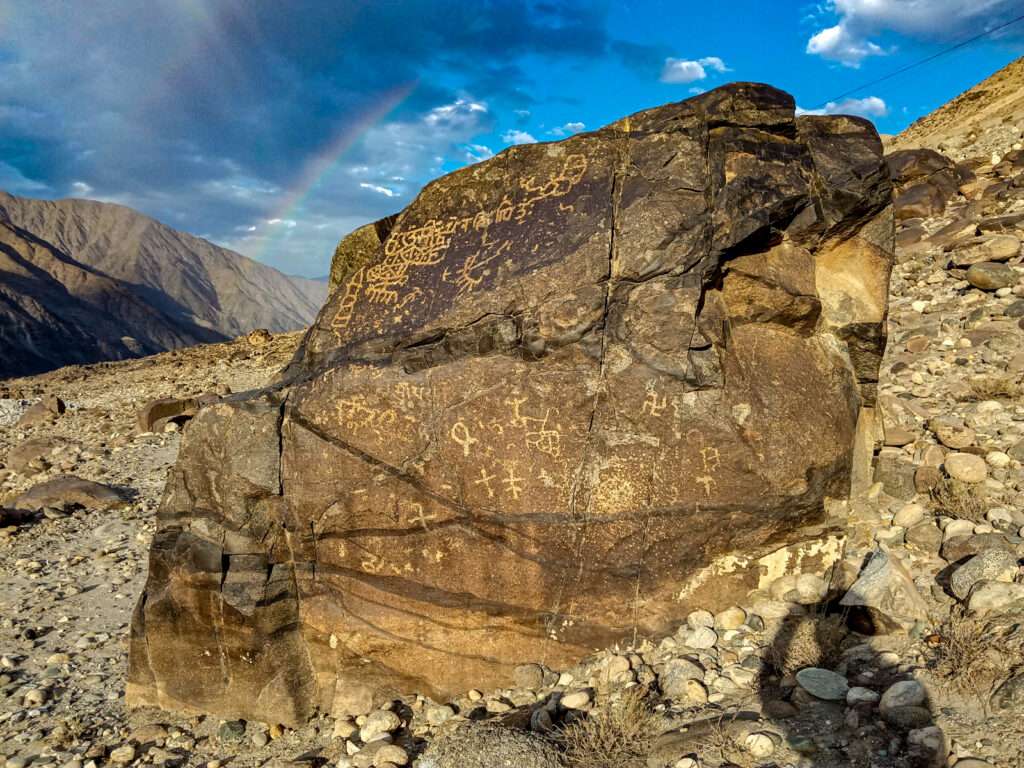
It is located on the left bank of the Indus in District Diamer of Gilgit Baltistan at distance of about 30 km from Chilas. On a flat vertical surface on the Western side three animals are engraved. Two of them ibexes in local style but the third shows all the peculiarities of a Scythian prancing horse but it has curved horns on the head, suggesting that the intention was to draw an ibex. However, it has been modelled on the Scythian style of a horse. Nearby, is a small boulder lying flat on the groung, having a Kharoshthi inscription of the first century B.C.
HODUR SITE
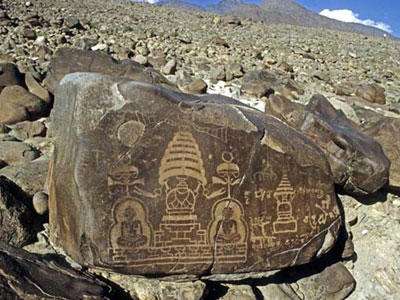
It is located on the right bank of the Indus in District Diamer of Gilgit Baltistan. There are prehistoric and historic period carvings at this site. Prehistoric carvings mainly include hunting scenes of ibexes and other animals. Historic period carvings belong to Buddhist and Brahmanic faith which includes, temples, Stupas, and representations of Buddha, etc. Tower-like stupas are recurrent themes in the rock art of Hodur. Humans with axes are also engraved on boulders. Disc symbols are also found at Hodur.
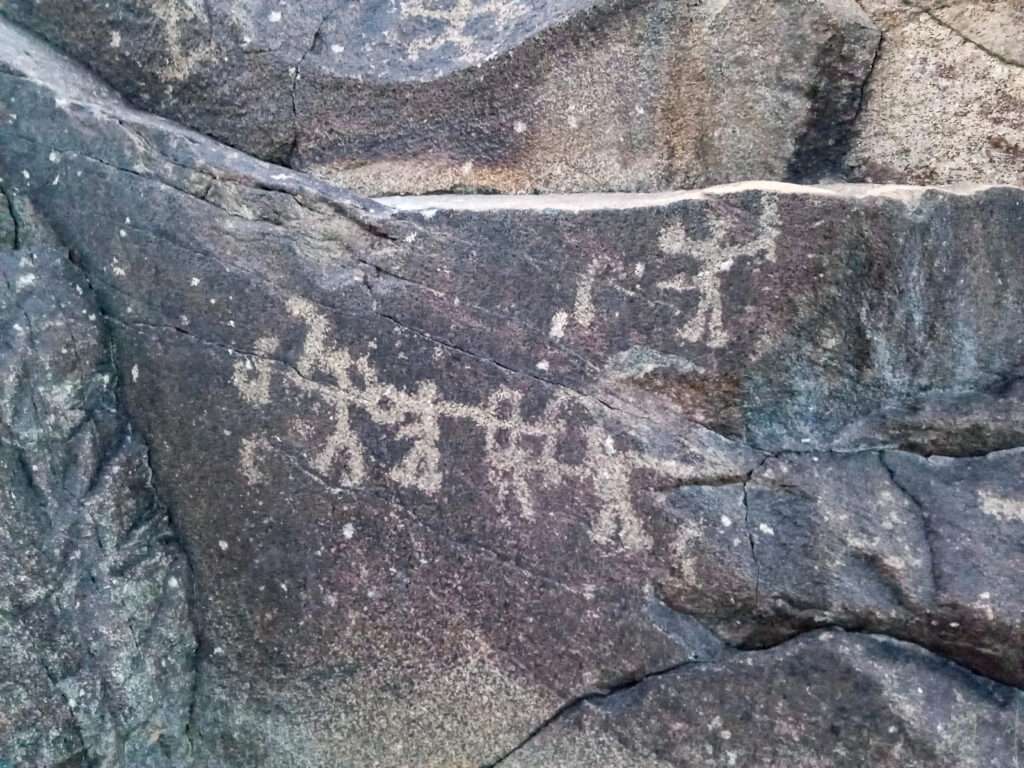
OSHIBAT SITE
This rock art site is located on the left bank of the Indus in District Diamer, Gilgit-Baltistan. The main themes at the Oshibat rock art site include animals, humans, and handprints. A demon figure is also engraved at the Oshibat rock art site
GICHI NULLAH SITE
This site is located between Thor and Chilas-VI site along KKH in District Diamer, Gilgit-Baltistan. Stupas, animals, giant human figures, handprints, and geometric designs are the main themes in the rock art of Gichi Nala. Ancient scripts are also engraved at this site.
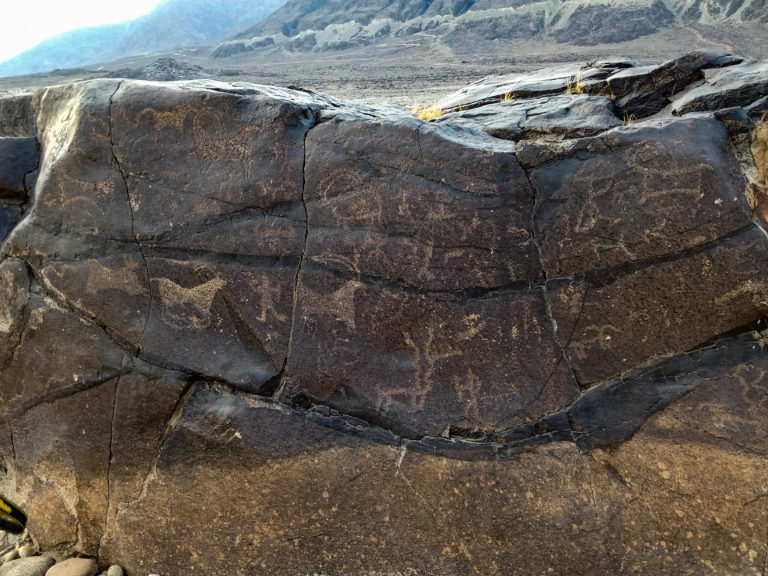
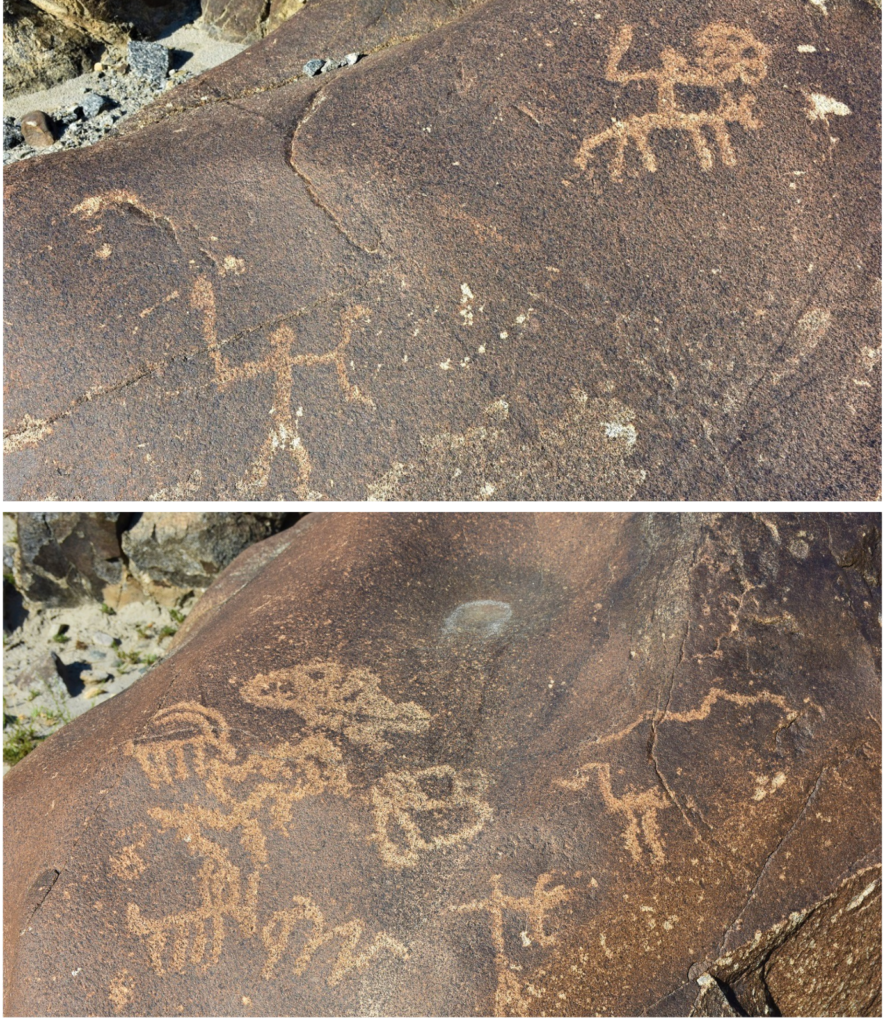
MINAR GAH SITE
The Minar Gah rock art site is located on the left bank of the Indus River in the Diamer district. It is about 30 km west of Chilas town. Many small boulders are covered with rock carvings and Brahmi inscriptions. Both prehistoric and historic rock carvings are found at Minar Gah. Prehistoric rock carvings are mainly located near the riverbank whereas the historic images are mainly concentrated at the roadside. The majority of the boulders depict animals, hunters, warriors, stupas, tridents, the sun motif, the linga, and dancing scenes. The dancing scenes are most interesting in the rock art of the Diamer district. There are quite a few rock art sites in the Diamer district where one finds dancing scenes. Apart from the dancing scene, the most noticeable carving at Minar Gah is of a linga. The linga, an aniconic representation of the Hindu god Shiva, is depicted on a stand with two Brahmi inscriptions on its left.
CHILAS-I SITE
This site is located on the left bank of the Indus in District Diamer, Gilgit-Baltistan. It is noted for some of the best specimens of Buddhist carvings in the Diamer district. Buddhas and Bodhisattvas are the two main themes in the rock art of Chilas-I. Three rock art panels on the roadside and north of Thalpan bridge depict Buddhas, Bodhisattvas, stupas, and a devotee. The first panel which is the larger than two others represents the most impressive engravings of Bodhisattva Maitreya, Bodhisattva Avalokiteshvara, seated Buddha, Manju Sri, stupas, and king Simhadeva.
There are also several stupa images on a boulder located northeast of the main Bodistavas and Buddha rock art panel. Stupa images are also located on several other cliffs and boulders to the west of the rock art panel of Buddhas and Bodhisattvas. The most prominent is the carving of the body sacrifice of Buddha.
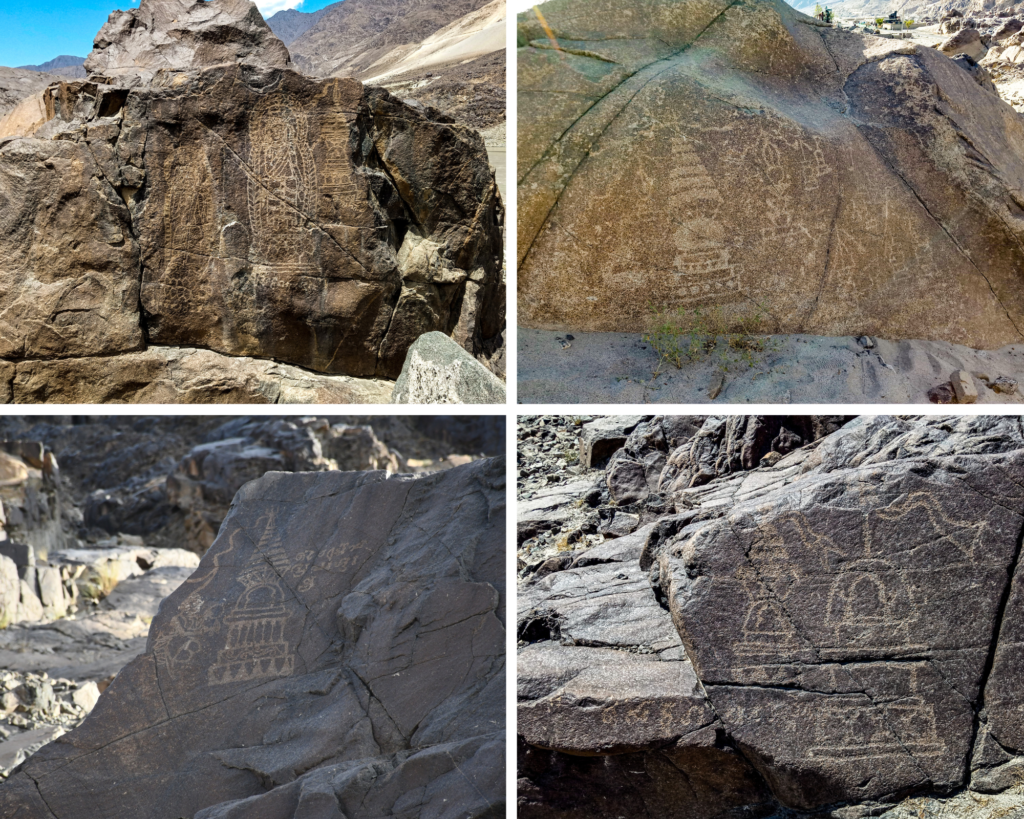
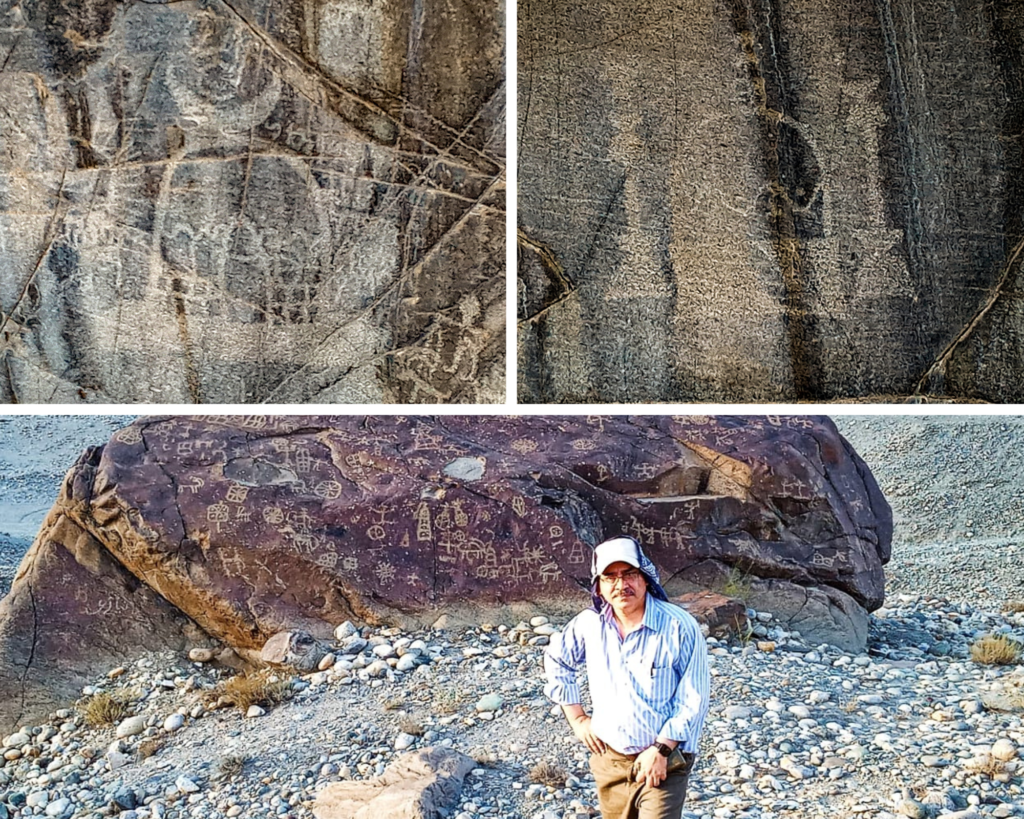
CHILAS II SITE
This site is also located on the left bank of the Indus District Diamer, Gilgit-Baltistan. It is noted for two types of carvings, prehistoric and historic. Prehistoric engravings are depicted on the eastern rock wall whereas the historic period carvings are located to the west of the eastern rock wall. There are four rock panels on the eastern rock wall which mainly depict hunting scenes and belong to the prehistoric period. The historic period on the western ridge depicts mainly Buddhist carvings. The most noticeable carvings are of monks before stupas. A frieze of gift bearer and dancers is a prominent carving at Chilas II. Both Brahmi and Kharosthi scripts are found at this site.
THALPAN I SITE
This site is located on the right bank of the Indus in District Diamer, Gilgit-Baltistan. It is noted for Buddhist carvings. The most prominent carvings are of Preaching Buddha, Buddha, and Vajrapani, Temptation of the Budhha by Mara’s daughters, Buddha with his disciples, and stupa. Apart from Buddha and Bodhisattva depictions, there are numerous carvings of stupas and circles (discs). Animals and humans are also engraved at this rock art site.
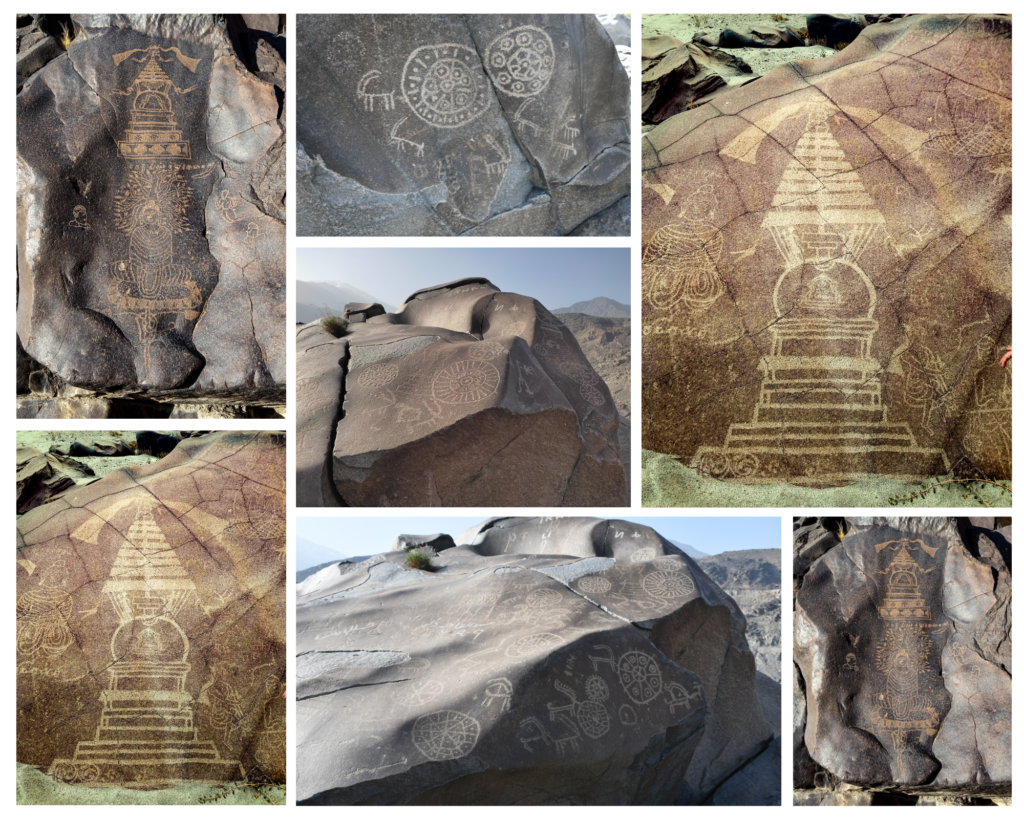
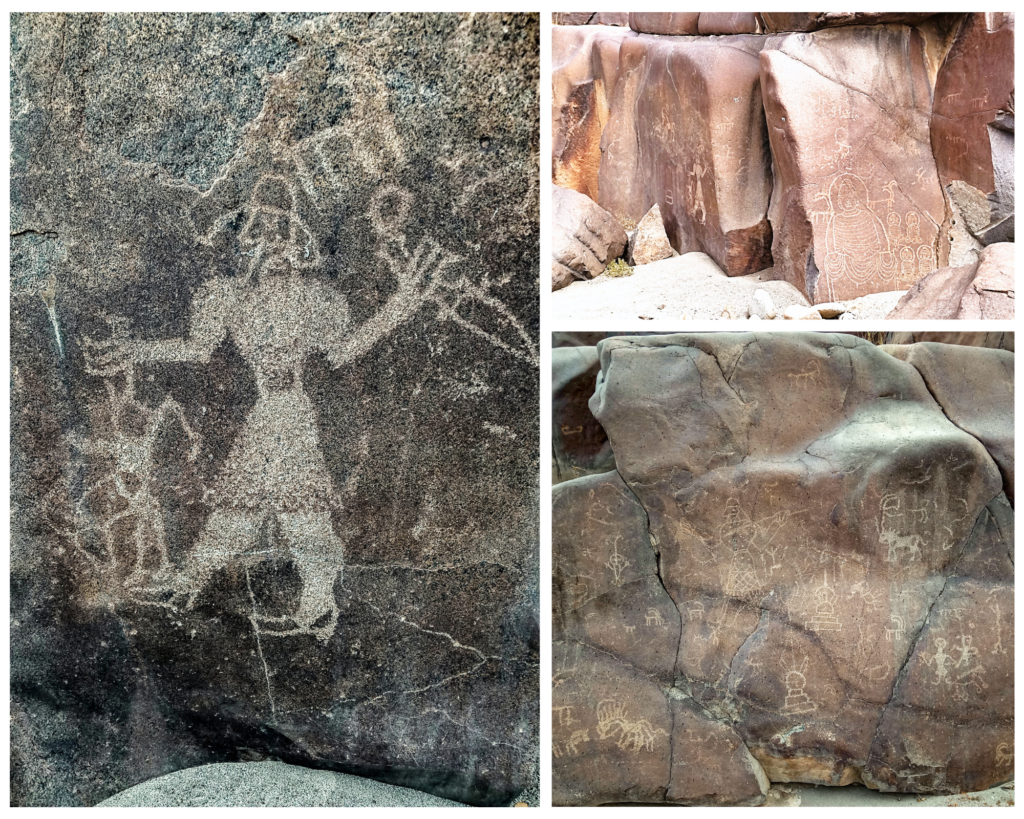
THALPAN II SITE
This site is also located on the right bank of the Indus in District Diamer, Gilgit-Baltistan. Thalpan II which include Buddha, Bodhisattvas, Jatakas, and stupas. At this site Buddha is depicted in meditation and preaching. It also depicts Buddha’s first sermon in deer park with engravings of five monks. Bodhisattvas and stupas are also found at this site. Sibi Jataka is engraved on a boulder at Thalpan II. A variety of stupa engravings are engraved on boulders and rock walls at this site. Ancient scripts especially Kharosthi and Brahmi are also engraved near the stupas and images of Buddha.
SHING NULLAH SITE
This site is located on the right bank of the Indus along the Karakuram Highway. It is noted for Buddhist carvings. Images of Buddha are engraved at this site. Stupa images are also a noticeable feature of the Shing Nullah rock art site. Human and geometric motifs are engraved at this rock art site. Most amazing is a depiction of a labyrinth. Kharosthi and Brahmi scripts are also found near the carvings of stupas.
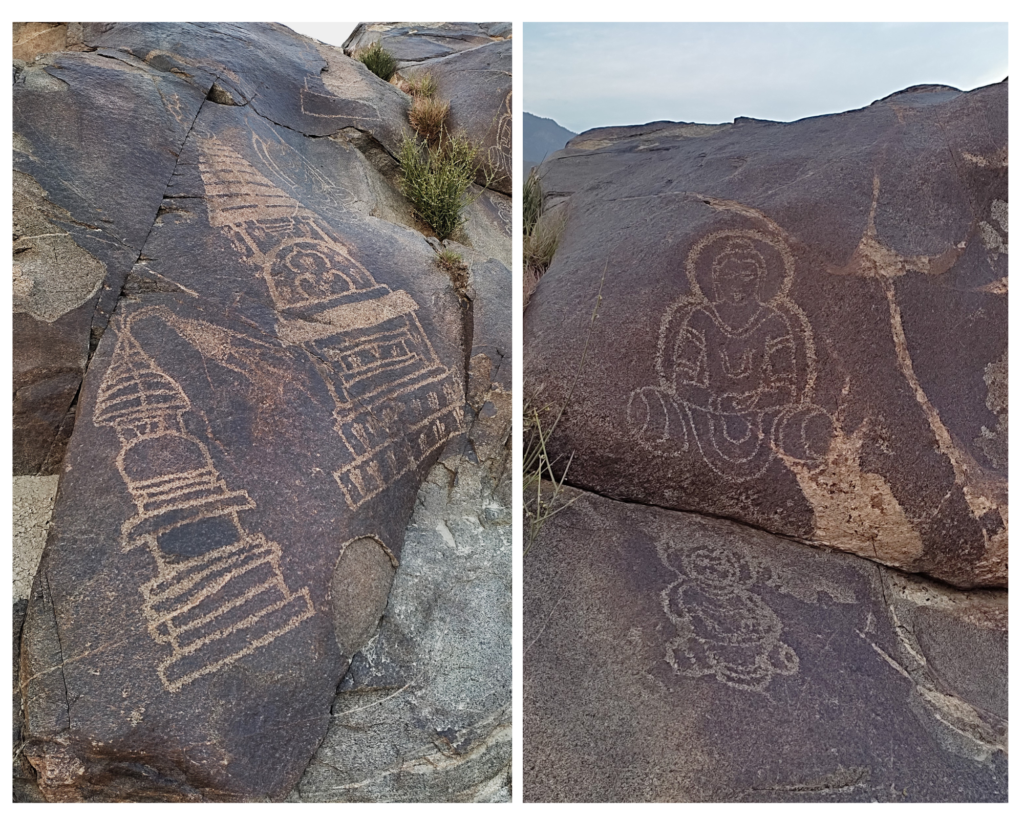
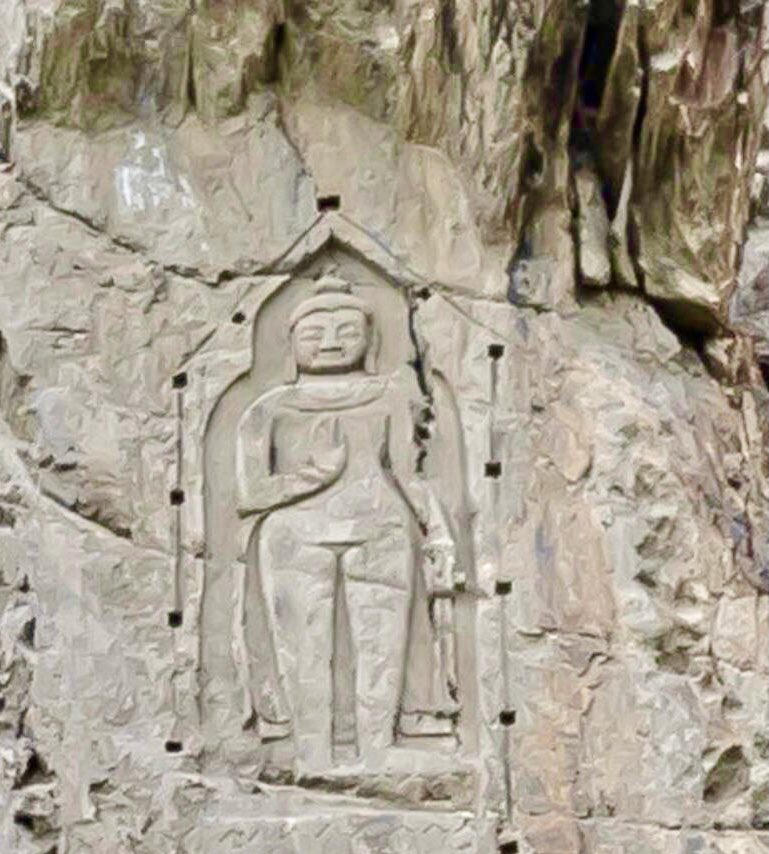
KARGAH BUDDHA SITE
The Kargah Buddha is an impressive rock carving site which is located in Kargah Nullah about 6 km west of Gilgit city on the road to Ghizar Valley. This carving is about three meter tall and looks down protectively over Gilgit. Kargha Buddha was carved in the 7th century. The local legend about the Buddha tells of a man-devouring ogress, called Yatshini who lived at Kargha.
According to famous Japanese scholar Dr. Haruko Tsuchiya, “This is a chambs style figure. The only other figure of the same style is found in Mulbe Ladakh.
SACRED ROCK OF HUNZA
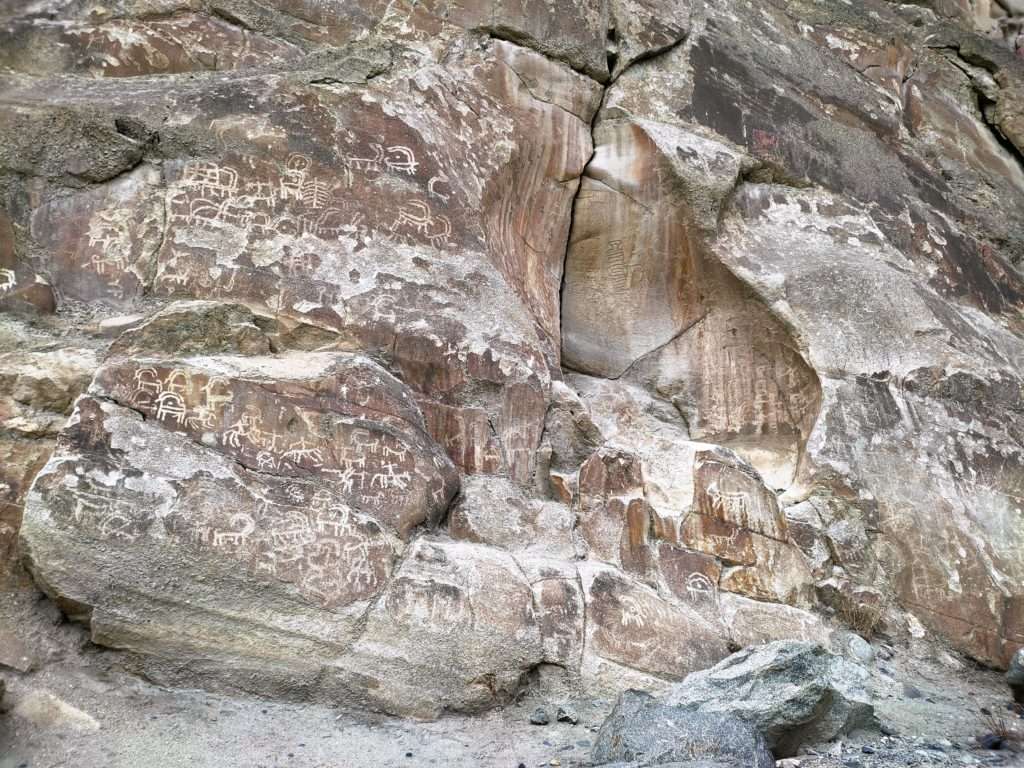
Just like Chilas and Gilgit, Hunza was an important staging post on the ancient Silk Route and was heavily travelled for thousands of years by traders going back and forth between Chian, India and West over Kilik, Mintaka and Khunjrab passes. The most convincing proof of this lies in the inscription on the Sacred Rocks of Hunza which are as known as the Silk Route Visitors Book. This well marked rock art site is right beside the KKH, between the road and the river. The Sacred Rocks of Hunza consist of four main boulders with two stages of rock engravings and carvings. The name Haldeikish translate to ‘a place of many male Ibex’, with engravings of Ibex scattered along the rock faces, a message to all travellers that wild Ibex were plentiful in this area.
The inscriptions on the rocks are in Kharoshti, Brahmi, Gupta, Soghian and Tibetan. One can also see a portrait of the 1st century Kushan king of Gandhara, Gondophares and several drawings of hunting scenes with houses and riders shooting at ibex, ibex surrounded by horsemen and men dancing around ibex
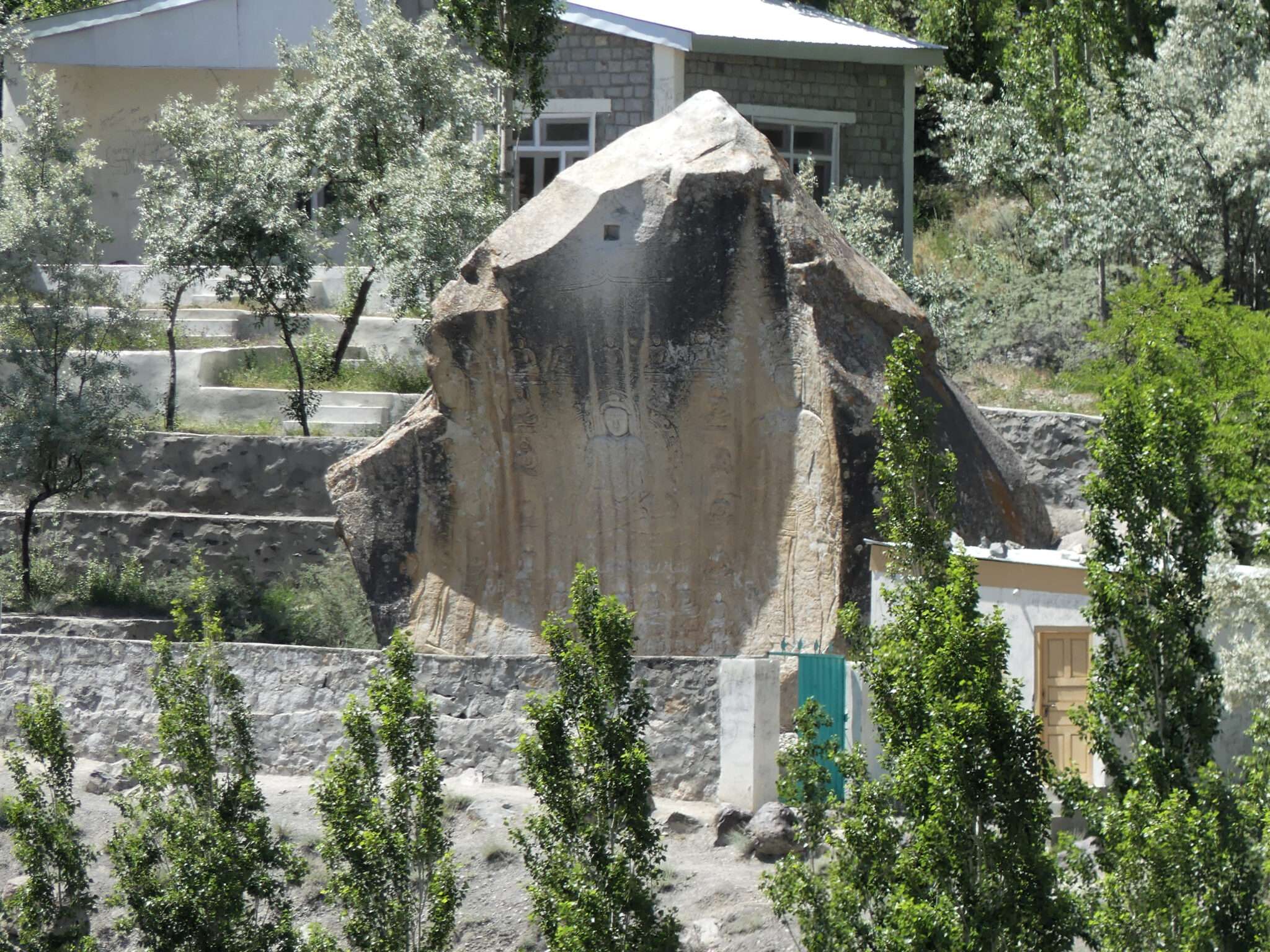
MANTHAL BHUDDHA ROCK, SKARDU
Manthal is one of the most important relics of Buddhism in Skardu Valley. This rock is located in Manthal village of Skardu at a distance of about 3 km on the road to Sadpara Lake and Deosai Plains. This is 9th century Buddha relief which represents the later phase of the “Golden Era of Buddhism” in Upper Indus Valley between the 8th and 9th centuries. The impressive Buddha relief on a large granite rock shows a large meditating Buddha surrounded by small Bodhisattvas and two standing Metreyias (future Buddha).